In the second episode of the VIDVOX podcast, hosts David Lublin and Cornelius sit down with two pillars of the live visual community: Nica Ross and Chris Jordan (Seej).
Nica is a Pittsburgh-based artist, professor at Carnegie Mellon’s School of Drama, and the current Director of the Frank-Ratchye STUDIO for Creative Inquiry. Chris Jordan is a New York City-based artist and the organizer of G33k Xmas, a long-running legendary tech-swap and community gathering.
The conversation spans the history of analog "wet sets," the importance of "creative research," and the radical politics of equipment access.
Origins: Inspirations
The opening section of the interview dives into the origin stories of our two guests.
Nica tells us about growing up in a household full of artistic "toys" provided by an artist mother who worked in theater and film. Early games involved making stop-motion animations, which eventually led to a formal study of film and photography. Nica’s entry into the world of live visuals was sparked by an internship with Caden Manson and the Big Art Group. When Caden needed a way to perform a live "data mosh" on stage, Nica discovered the Bangnoise Quartz Composer plugins and VDMX, manually dropping i-frames to create the glitch effect live.
Chris Jordan (Seej) found his start in the Minneapolis scene, inspired by 1960s light-show artists and the history of technology. After spending years volunteering at the Midwest Media Artists Access Center, Chris moved to New York in the late 90s, where he began "hauling around projectors" and building a community of media artists from the ground up.
The STUDIO for Creative Inquiry and the Power of Access
A major theme of the discussion is the role of institutional and community access. Nica describes the Frank-Ratchye STUDIO for Creative Inquiry as a "creative research laboratory". Originally founded in the 1980s as the Center for Art and Technology, the STUDIO functions as a non-tuition-based entity that allows for workshops and experimental projects outside the regular academic schedule.
Chris notes that "a lot of hip-hop came out of access—access to turntables". This same ethos applies to live visuals, whether it’s "slipping projectors back into startups early in the morning" after a party or repurposing hardware from campus e-waste.
G33k Xmas: The Generational Tech Swap
For 20 years, Chris has hosted G33k Xmas, a gathering where artists give away excess gear to one another. The rules are simple:
Offer up an item.
If multiple people want it, the group decides based on need.
If nobody wants it, you take it home.
This process has become a "generational thing," where younger artists are given access to classic hardware like the Panasonic WJ-MX50 mixer, giving new life to objects that otherwise would have reached the end of their lifespan.
Visual Styles: Fire, Found Footage, and Human Hands
The guests' personal styles highlight the diversity of the medium:
Seej & Mechasonic: Chris discusses his work with Mechasonic, a project involving heavy metal shops, light, and sound. He recalls an outrageous performance featuring a piano on a forklift, rising into the air and crashing to the ground while on fire. Chris's philosophy is to "show the errors" so the audience knows there is a human behind the controls.
Nica & Found Footage: Nica’s style involves "scraping the internet" for strange, found videos and mixing them live using blend modes and masking. Nica also spent time with the Joshua Light Show, where the primary rule was that any light hitting the screen had to be manipulated through human hands.
Weird Gear: Wobbulators and Thermal Cameras
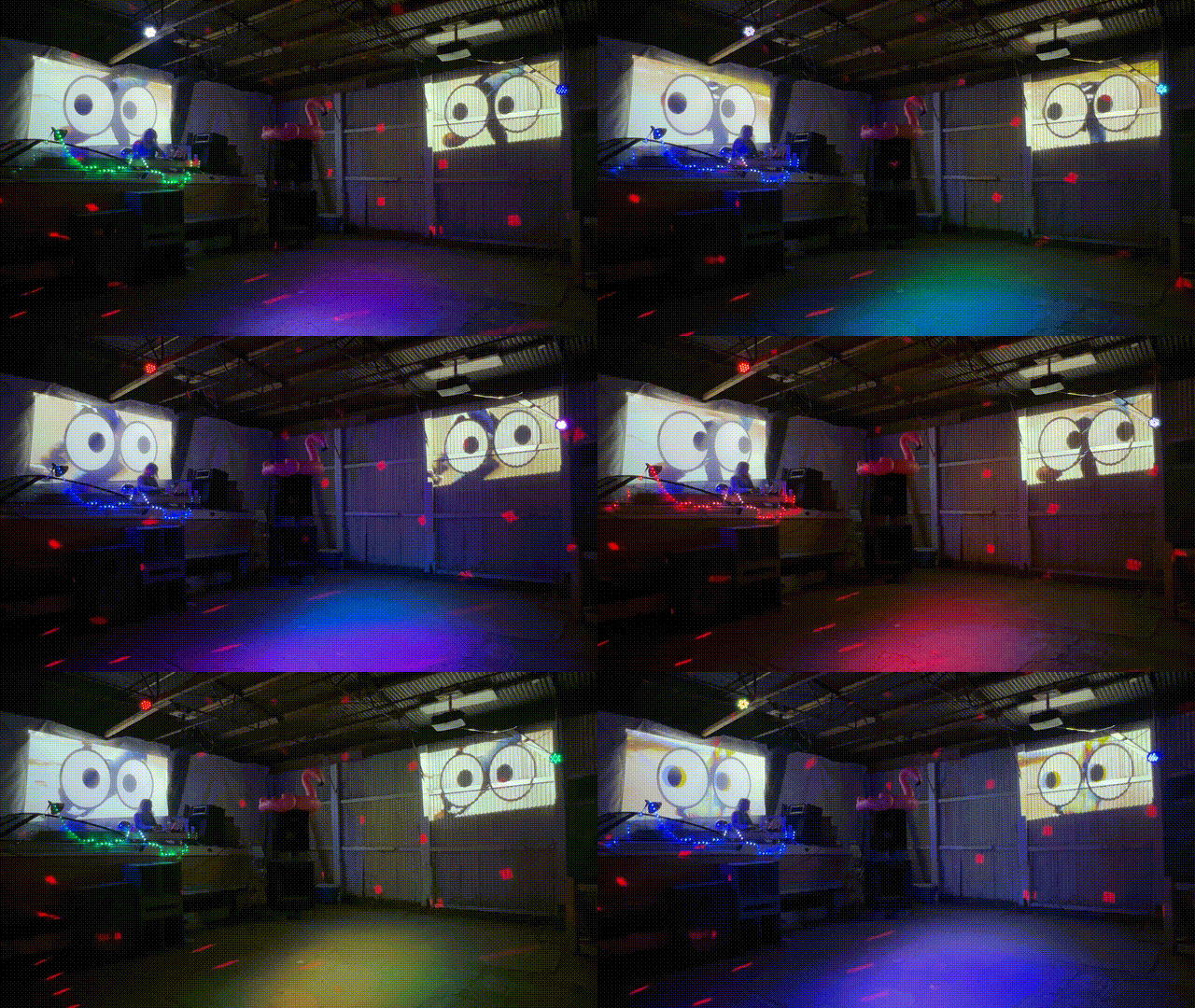
The conversation takes a deep dive into "weird gear," specifically the Wobbulator. Based on a 1960s invention by Nam June Paik and Shuya Abe, the Wobbulator is a CRT television augmented with extra copper coils. By sending waveforms into these coils, the artist can manipulate how electrons hit the screen, causing the image to wobble and bend in ways that only exist on that specific cathode ray tube.
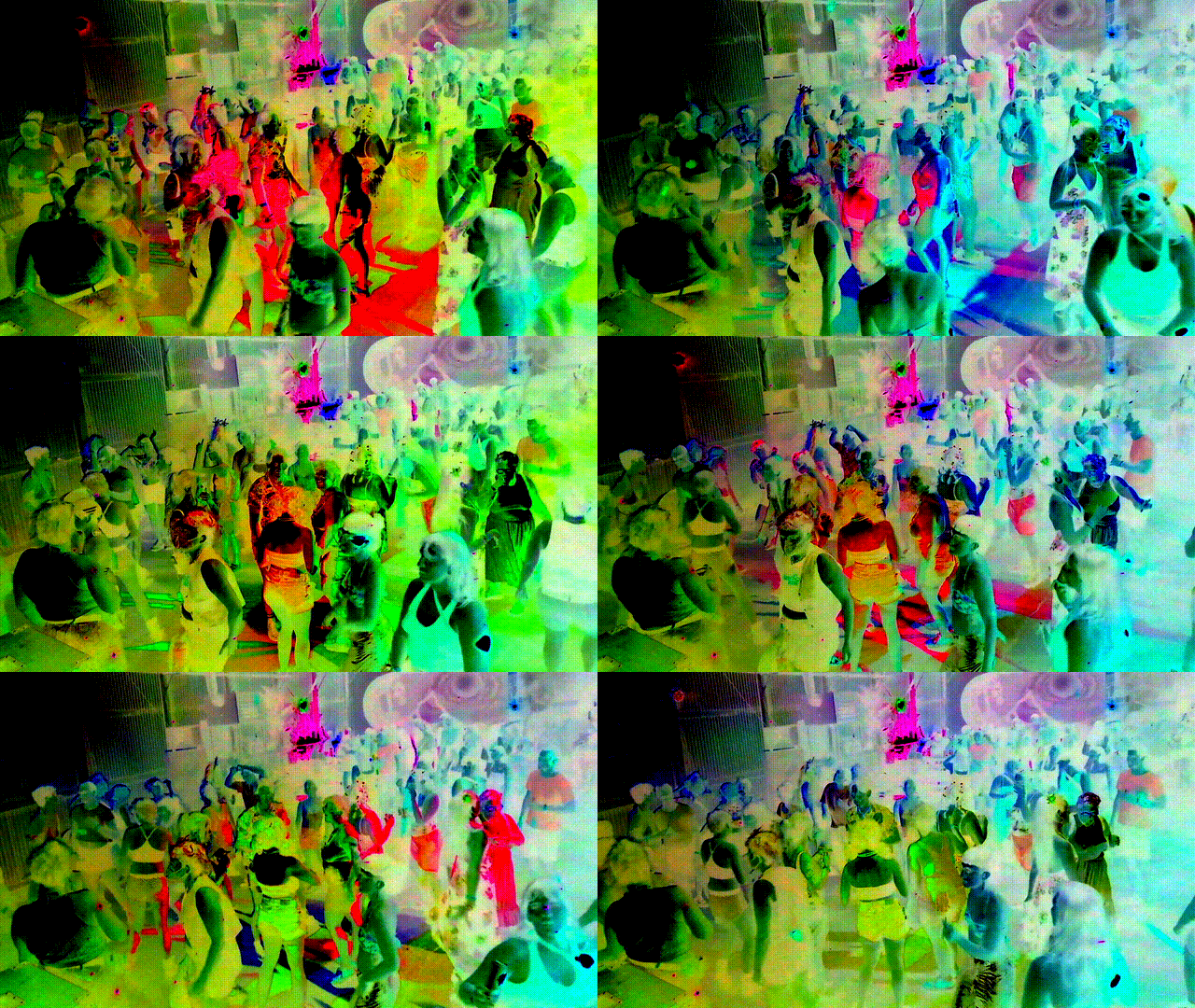
Nica also experiments with thermal cameras to create "blobby people shapes" for installations, such as a project at a local sauna where the audience became the instrument through their own body heat.
Advice for Growth: "Be the Nerd You Are"
Closing out the episode, Nica and Chris offer advice for artists looking to grow a scene:
Show Up: Community is often found by physically going to a space and being present.
Be Curious: You don't have to be an expert to be welcomed; people are often more invested in your curiosity than a specific skill set.
Put Yourself Out There: Growth comes from being a little uncomfortable and "putting yourself out there".
As Nica puts it: "Be the nerd you are. Don’t hide it."
Links & Mentioned Projects
Nica Ross: nicaross.com and CMU VMD
Chris Jordan (Seej): seej.net
The Frank-Ratchye STUDIO for Creative Inquiry: studioforcreativeinquiry.org
Large Scale Systems Museum: mact.io
Wobbulator Video: The Wobbulator at ETC
Jen Kutler Workshop: Wave Farm
Orei Matrix Hardware: 4K30Hz Version for <$160 USD or 4K60 version for <$400 USD